
Keyword Comparison Finder
Find up to 10 relevant comparison and alternative queries for a brand or topic.
No credit card required
Choose your target country
Copy and CSV export
Simple pricing. Powerful results.
No hidden fees. No useless features. Get started for free with zero commitments, and upgrade only when your business grows.
Save 25% with annual billing
For trying KeywordStat and getting started. Perfect for occasional keyword research.
- ✓2 free analyses per day, no registration
- ✓5 analyses per day with a free account
- ✓Up to 250 keywords per analysis
- ✓All 8 metrics: Volume, KD, CPC & more
- ✓Standard export & keyword clustering
For SEO specialists and content teams. Built for daily keyword research workflows.
- ✓100 analyses per day
- ✓Up to 5,000 keywords per analysis
- ✓All 8 metrics: Volume, KD, CPC & more
- ✓Unlimited export & keyword clustering
- ✓Priority AI processing speed
For agencies and high-volume marketing teams. Contact us for custom requirements.
- ✓Custom high-volume usage limits
- ✓Full API access
- ✓Bulk processing & automated reporting
- ✓Higher usage limits
Cancel anytime · 14-day money-back guarantee on paid plans


Continue your research
Keep your research workflow in your KeywordStat account.
Explore comparisons around a product or topic
Comparison queries describe a choice between options. They may include alternatives, competing approaches or differences between products, rather than simply repeat a general topic with a different adjective.
These ideas can reveal what a prospective reader wants to evaluate before choosing. They are starting points for research, not evidence that one product is better, an endorsement of a brand or proof that every generated comparison has real search demand.
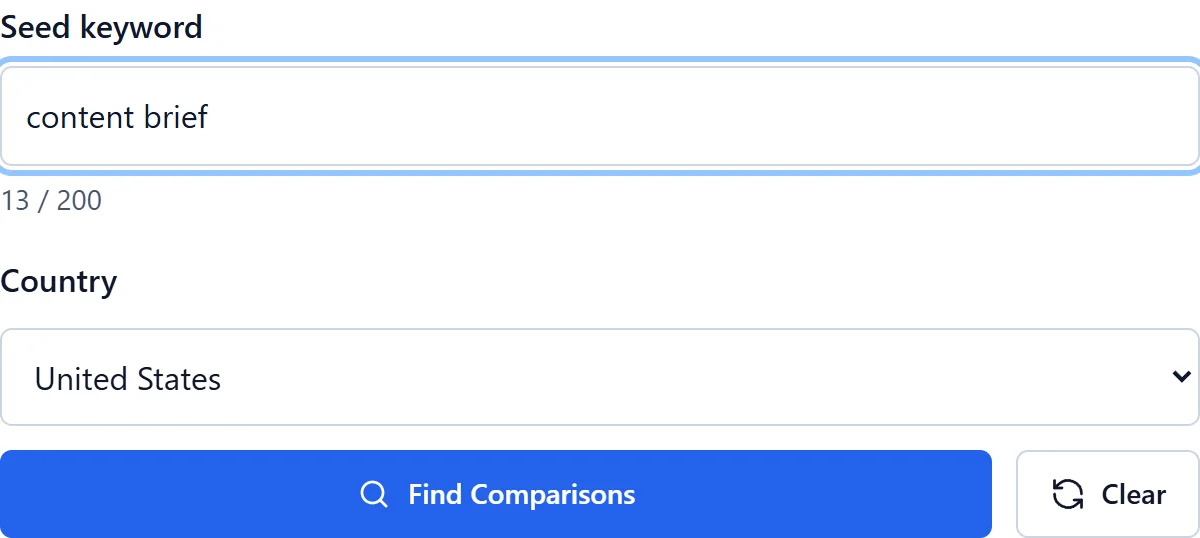
Keep the comparison relevant and verifiable
This finder takes one seed and generates up to 10 relevant comparison or alternative queries. It is not a form for entering several keywords and receiving an automatic competitor ranking. The table supports selecting, copying and exporting ideas with available stored metrics.
Review whether the options solve a comparable problem for a similar audience. Remove unrelated pairings and check product facts from current primary sources before writing a comparison. Generated wording is not a source for prices, specifications or verdicts.
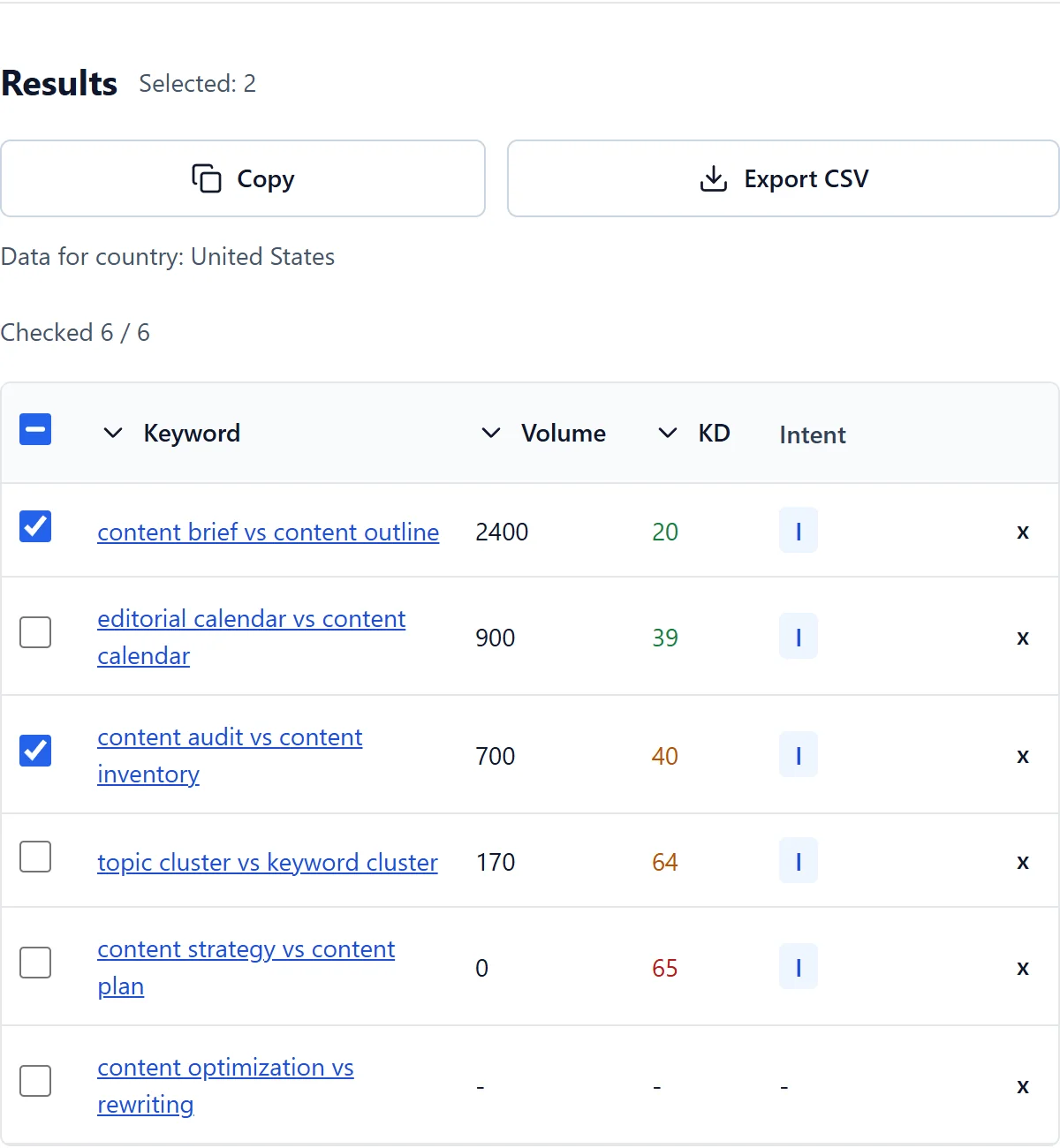
Prepare a balanced comparison brief
- Enter a recognizable product, brand or clear topic as the seed.
- Keep comparisons that represent a real decision for your audience.
- Define consistent criteria such as use case, constraints and required capabilities.
- Verify factual claims and disclose the limits of the comparison before publishing.
Distinguish an alternative query from a product review
A search phrase tells you what someone might compare, not which conclusion your article should reach. A useful page explains who each option suits and where the comparison is incomplete, rather than selecting a winner only to repeat a commercial claim.
A commercial-looking query does not guarantee purchase intent or conversion. Check the actual results and the reader’s stage in the decision process. Missing numerical coverage remains unknown and should not be used to manufacture a demand ranking.
Frequently asked questions
Do I need a credit card?
No. Free access works without a credit card within the current daily allowance.
Why are some metrics missing?
Data is not available for every keyword and country. An unavailable value does not mean zero.
Does this compare several pasted keywords?
No. Enter one seed to find comparison and alternative query ideas. Use Explorer to compare an existing list of keywords in a table.
Are the generated comparisons verified product claims?
No. They are research prompts. Verify specifications, prices and any performance claim against current primary sources before using them in content.
Should I publish every suggested comparison?
No. Choose only relevant, useful comparisons you can substantiate. Avoid unrelated products and duplicate pages targeting the same decision.