Search intent is the underlying reason why a user enters a query into Google or any other search engine.
Not the keyword itself, not the search volume, not the CPC. The reason. If you miss the intent, you can rank for a keyword, pull traffic, and still get zero sales, zero leads, zero money.
- What Search Intent Actually Means in SEO
- Types of Search Intent
- Informational Intent
- Commercial Intent
- Transactional Intent Means The User Wants Action
- Navigational Intent Is More Important Than People Think
- Intent Matrix
- Mixed Intent
- How To Identify Search Intent Correctly
- The Three Cs Rule
- Why Most SEO Campaigns Fail At Intent Matching
- Search Intent Changes Faster Than Most People Notice
- Optimizing Search Intent for the AI Overview Era
- How to Use KeywordStat to Determine Search Intent
- Instead of a Conclusion
What Search Intent Actually Means in SEO
A lot of beginners obsess over volume and forget to ask the obvious question: what does the user actually want here?
Somebody searching for “best running shoes for flat feet” is not in the same stage as somebody typing “buy Nike Pegasus 41 online”. One is researching. The other one already has a credit card nearby.
Google understands this frighteningly well now. You can see it directly in the SERP. Product pages rank for some queries, blog posts dominate others, Reddit threads suddenly appear where Google thinks people want opinions instead of polished landing pages.
I have seen websites spend months targeting huge keywords only to realize the intent was completely wrong. Traffic looked beautiful in Ahrefs screenshots. Revenue looked dead. That hurts.
Back when I worked on affiliate and SaaS projects, this was one of the fastest ways to burn a content budget. Writers produce “SEO articles”, pages get indexed, impressions grow, and then everyone wonders why conversions are miserable. Wrong intent. Same old story.
Types of Search Intent
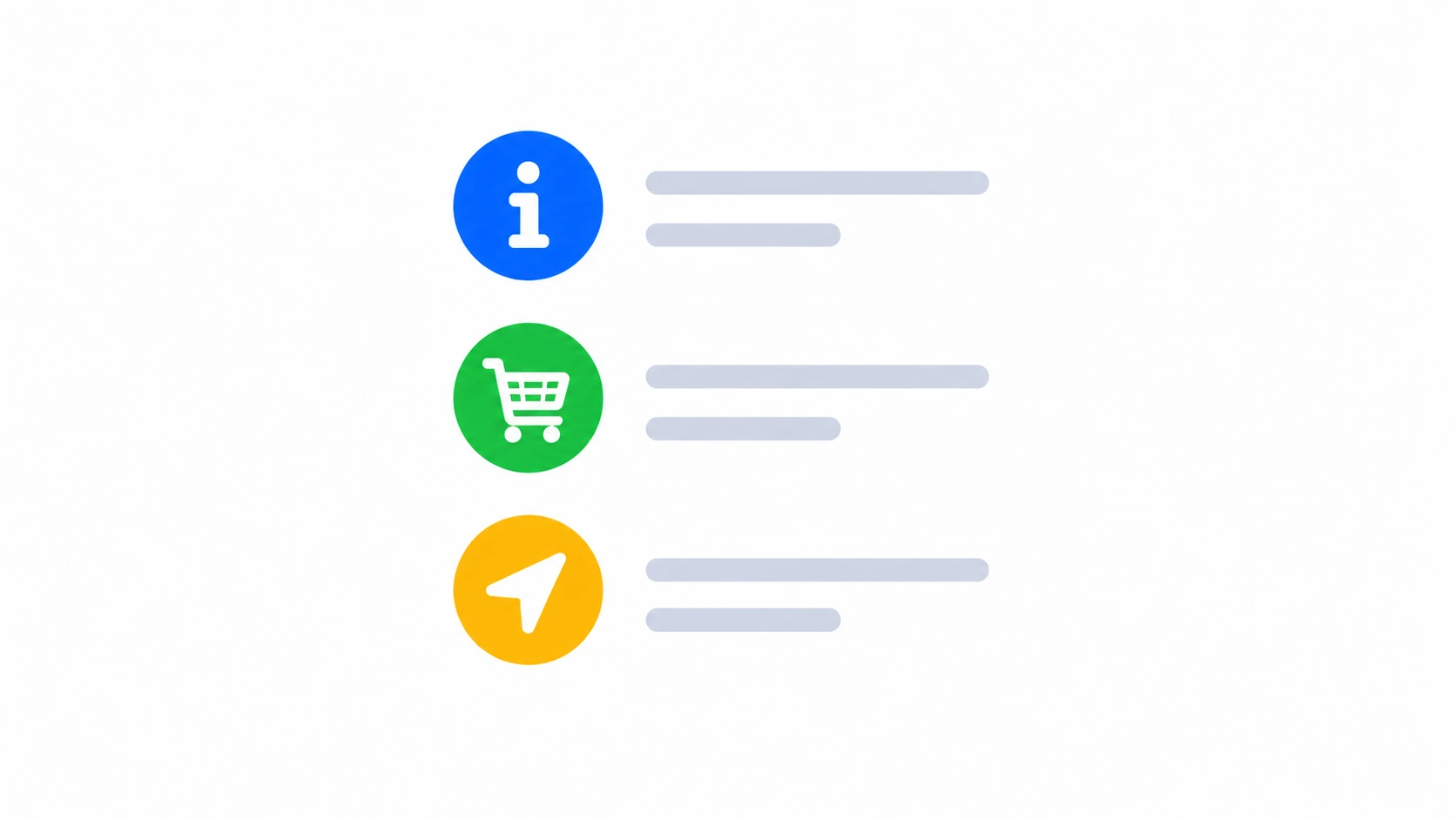
Forget the sterile textbook classifications for a second. Real search behavior is messy. People jump between research, comparison, and purchase within minutes. Still, these four categories help organize keyword strategy without going insane.
Informational Intent
This is research traffic.
Users want answers, explanations, tutorials, examples, comparisons, definitions. They are trying to learn something before making a move.
Queries usually look like this:
- how to speed up a WordPress site
- what is search intent
- why pages lose rankings after update
Informational keywords often bring huge traffic numbers, but many marketers overestimate their business value. A keyword with 40,000 searches sounds exciting until you realize most visitors just want a quick answer and disappear forever.
Still, ignoring informational intent is a mistake too. This is where topical authority starts building. You publish useful content long enough, Google begins trusting the domain more aggressively across the entire topic cluster.
And yes, informational pages quietly assist conversions later through branded searches. Most analytics dashboards hide that part badly.
Commercial Intent
This is comparison mode.
The user already knows the problem and is looking for the best option before spending money. These keywords sit in the middle of the funnel where competition becomes ugly fast.
Searches like:
- best CRM for startups
- Ahrefs alternatives
- top email marketing tools
Usually convert well if the page matches expectations. Usually.
The problem is that many SEO teams create generic “Top 10 Tools” articles copied from everybody else. Same screenshots. Same fake pros and cons. Same recycled garbage written by people who never touched the products.
Google has started rewarding first hand experience more aggressively because users got tired of reading AI sludge disguised as reviews.
I understand why.
Transactional Intent Means The User Wants Action
This is where money happens.
The person is ready to buy, subscribe, install, register, book, download, or contact someone. Search intent becomes brutally obvious here because the wording changes completely.
“Buy standing desk online”
“Order protein powder”
“Cheap flights to Madrid”
Nobody typing these queries wants a 4,000 word educational article. Yet I still see websites forcing users through giant SEO intros before showing the actual product. Completely backwards.
Transactional pages should remove friction, not create it.
One thing I noticed after years in SEO: high volume transactional keywords are often war zones dominated by giant brands with absurd link profiles and enormous ad budgets. Smaller sites usually grow faster by targeting specific long tail purchase intent instead of chasing monster head terms immediately.
Less traffic. Better intent. Less noise.
Navigational Intent Is More Important Than People Think
This one gets ignored constantly.
Navigational intent happens when users already know where they want to go:
- Ahrefs login
- YouTube Studio
- Gmail
- Nike official store
Google understands these instantly. Ranking for them without being the actual brand is often pointless.
But here is where it gets interesting.
Branded searches are one of the strongest trust signals in SEO. When people search for your company name directly, Google sees demand around the brand itself, not just around isolated keywords. Over time that changes how the entire domain performs.
You can fake backlinks easier than you can fake genuine branded demand. That’s why strong brands survive algorithm chaos much better than thin affiliate sites built only around search volume spreadsheets.
Intent Matrix
Let’s use a coffee machine as an example to illustrate how the same product changes its content requirements depending on the user’s thoughts at the time of the request.
| Intent | Example Query | What the User Expects to See | Optimal Page Format |
|---|---|---|---|
| Informational | “why is my coffee machine making bitter coffee” | A quick diagnosis of the problem, step-by-step troubleshooting tips, and a cleaning video. | Blog guide. Expert analysis of the causes, a maintenance checklist, and zero aggressive sales. |
| Commercial | “best automatic coffee machines for home” | Honest brand comparisons, genuine drawbacks, and up-to-date pricing. | Listicle article. Ranking with real photos, a comparison table of specifications, and expert recommendations. |
| Transactional | “buy DeLonghi Magnifica Start on sale” | Fast checkout, price, shipping details, and an “Add to Cart” button. | Product page / Landing page. Clean UX, prominent pricing, customer reviews, and minimal SEO text. |
| Navigational | “official DeLonghi service center website” | A direct link to the contact page of the specific brand. | Contact page / Brand homepage. Properly optimized snippets so users can reach the destination in a single click. |
Mixed Intent
It would be nice if every search query could be neatly categorized into one of these four intent types. However, real-world search is far more complex. That is why the concept of mixed intent exists. It refers to situations where users entering the same keyword are looking for fundamentally different types of content.
For example, consider the query “SEO software”.
How can you determine what people are actually looking for? Some users want an in-depth market overview to compare different tools before making a decision. This represents commercial intent. Other users are experienced SEO professionals who already know which tool they want and are simply looking to sign up or purchase a subscription. This represents transactional intent.
When you examine the search results for this query, you’ll find a variety of page types. There may be product pages, blog articles, Reddit or Quora discussions, and featured answer sections.
How Should You Approach It?
Don’t try to guess the search intent based solely on the keyword itself, such as “SEO software”. Instead, always analyze the composition of the actual top 3–5 search results. If two of the top results are blog posts and only one is a landing page, your chances of ranking with a product page are relatively low. Google has already determined which content format currently best satisfies the majority of users searching for that query.
How To Identify Search Intent Correctly
Most tools try to classify intent automatically. Some do a decent job. Some completely butcher it.
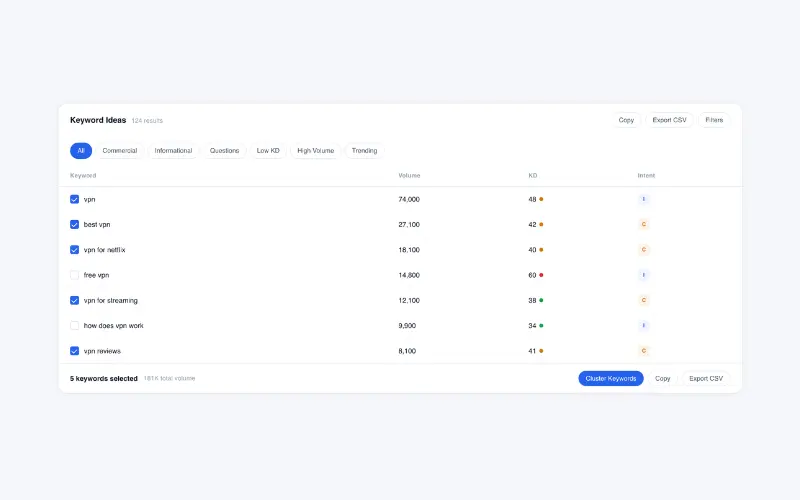
In KeywordStat, I wanted intent detection to be useful for real keyword work instead of becoming another decorative column nobody trusts. So we analyze SERP patterns, query wording, modifiers, ranking page types, and repeated behavioral signals across similar searches. Not perfect, obviously. Search intent changes over time. Google rewrites the rules constantly.
Still better than manually checking thousands of keywords in spreadsheets until your eyes melt.
Here is the uncomfortable truth though: intent classification is never fully binary.
A keyword like “best laptops for students” has commercial intent, but informational behavior too. Users compare. Research. Read reviews. Maybe buy later. Maybe not. Real search behavior sits somewhere in between categories much more often than SEO Twitter wants to admit.
That is why blindly filtering keywords by one fixed intent label can wreck your strategy.
The Three Cs Rule
Let’s go through a practical framework called The Three Cs of Search Intent. It will help you deconstruct the search results in just one minute.
When you’re analyzing, for example, the top 5 results for your target keyword, run them through the Three Cs rule.
Content Type
What is the dominant type of page in the top results? Are they product pages or category listings? Is it a blog with long-form articles, interactive tools, calculators, or maybe even videos?
If the SERP is filled with calculators, but you’ve prepared a text article, it won’t take the first position. That’s obvious. The user wants to calculate, not read. The intent has already been defined, and the content type has already been defined.
Content Format
This mainly applies to informational content. You need to understand what exactly helps your competitors rank at the top. Are they step-by-step instructions, how-to guides, or listicles? Maybe they’re expert interviews or short FAQs?
That’s why the format of the content you create for your website should closely match what your competitors are publishing.
Content Angle
For you, this is the main trigger and the value of the page—this is what you need to pay attention to. What exactly do your competitors’ headlines promise? For example: “for beginners,” “free methods,” “in just 5 minutes,” or “latest trends.”
The content angle shows the depth of your user’s motivation. So if everyone is writing for beginners, but you’re creating expert-level content, it may not match the search intent.
Why Most SEO Campaigns Fail At Intent Matching
Because people write pages they want to publish instead of pages users actually expect to see.
Simple. You can spot this immediately in search results. If Google shows category pages, and you publish a blog post, rankings struggle. If the SERP is filled with tutorials and you push a product page, same problem.
I tested this on dozens of projects over the years. Sometimes the content quality was fine. Links were fine. Technical SEO was clean. The page still refused to move because the format itself conflicted with search intent.
Google was saying: “wrong page type”. And Google usually wins that argument.
Search Intent Changes Faster Than Most People Notice
This part catches even experienced marketers off guard.
A keyword that worked perfectly as an informational article two years ago might now require a video, a product comparison, Reddit discussions, AI overview optimization, or something else entirely because Google changed what users prefer to click.
Search intent is not static. SERPs mutate constantly.
One update and suddenly half your “ultimate guides” lose traffic because users got tired of scrolling through bloated content written for algorithms instead of humans.
I think SEO people underestimate this shift badly.
Google became much harsher toward pages that answer everything except the actual reason behind the search.
The advent of AI-generated summaries has further accelerated this transition.
Common queries today are often fully implemented directly in generic informational queries using generated summaries, reducing the number of visits for queries with simple definitions.
As a result, such queries have become divided into two extremes: users either want an instant, structured answer from AI, or they actively seek a detailed, deep, first-hand experience of interacting with humans on forums and in lengthy expert reviews, which AI cannot replicate.
Optimizing Search Intent for the AI Overview Era
With the arrival of Google’s AI Overviews, the rules of the game have changed dramatically. The key challenge now is avoiding a future with zero clicks. Basic informational intent is gradually being taken over by AI instead of traditional websites. Why would someone visit your blog for a query like “what is PPC” if the answer is already displayed at the top of the SERP? The language model provides a structured definition immediately.
As a result, search intent has split into two categories.
Simple Facts
AI now handles these almost entirely on its own. There’s little point in spending your content budget creating articles that simply explain basic concepts. I think that’s pretty obvious.
Deep Experience
This is where users go when a simple AI-generated answer isn’t enough. They want expert opinions, real case studies, mistakes, experiments, screenshots, and hands-on experience—things that AI simply doesn’t have by definition. Yes, AI can quote these elements from your content, but users will often want to see them in the original source.
If you want your content to match modern search intent while also being cited by AI systems, you need to follow two rules.
Framework: Answer First
Long introductions and personal stories are no longer enough. Give users a clear answer to their main question first. Try to do this within the first two paragraphs and keep it under 100 words. Format the answer using bullet points, bold text, or even quotes. AI parsers can extract this type of content much more easily for their summaries, while users immediately get the answer they came for.
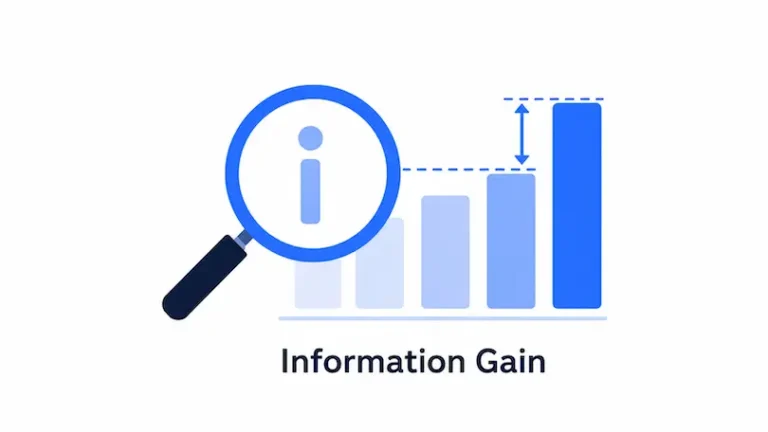
The Information Gain Principle
Google has officially patented algorithms that evaluate whether your article adds new information compared to what’s already available across the web. If you’ve simply rewritten someone else’s content in your own words, your article won’t satisfy search intent. You need to contribute something new. Add internal business data, unique expert insights, your team’s real-world experience, actual case studies, and even examples of what didn’t work.
How to Use KeywordStat to Determine Search Intent
When you’re collecting keywords, I recommend looking beyond search volume and keyword difficulty. You should understand the search intent from the very beginning. That’s why we added this metric to our keyword analysis.
Our platform doesn’t just look for words like “buy” or “how” in a keyword. It performs a comprehensive analysis of the search results using artificial intelligence.
What Does This Give Marketers in Practice?
Keyword filtering. Right from the start, you’ll understand which keywords are worth targeting and which aren’t. For example, you can keep only transactional or commercial keywords for sales landing pages or advertising campaigns.
Protection from content mistakes. Our tool can recommend the optimal page format before you start creating content. It tells you whether you need a blog article, a product page, or a category page. This helps you reduce your content marketing budget, avoid unnecessary articles, and prevent the common mistake of creating pages that will never rank higher than the second page of Google.
That’s why I recommend trying the automatic search intent analysis in KeywordStat. It can save you many hours that would otherwise be spent manually reviewing keywords.
Instead of a Conclusion
It’s time to admit that the biggest shift in SEO thinking has already happened. Modern SEO is no longer a game of guessing the perfect keyword density or figuring out how many backlinks you need to buy to rank at the top. Google has become much smarter, and users have become far more impatient.
If you still evaluate keywords only by search volume and keyword difficulty, your content marketing can turn into a meaningless exercise. You’ll be creating beautiful charts for the sake of beautiful charts, but they won’t bring you leads or sales.
How to Survive in the AI Search Era?
The SERP is the answer to all your questions. Before assigning a task to a copywriter or content manager, open the search results, look at the current top-ranking pages, and pay attention to the page type, content format, and content angle. Then you’ll understand what kind of content you need to create.
Don’t try to argue with the SERP—fit into it. Understand whose place you can realistically take.
Add extra value. If your content can be replaced by an answer from ChatGPT or Gemini, then you’re probably doing something wrong. Invest your resources in unique experience, real case studies, and demonstrating your expertise. No artificial intelligence can imitate those things.
Automate routine work. Don’t waste valuable hours analyzing thousands of keywords. I remember how we used to build semantic keyword lists and were afraid of missing even a single keyword. There’s no point in that anymore. Leave this work to algorithms and focus on strategy and the quality of your product.
Understanding search intent is the foundation of your SEO strategy. If you build that foundation the wrong way, your entire search campaign can collapse like a house of cards. So build it right, and your website will become a concrete wall that no search engine update will be able to move—no matter how many updates Google releases.