Search volume is an SEO metric that shows how often a specific keyword is entered into a search engine over the course of one month.
It is one of the most important SEO metrics, serving as an indicator of user demand and interest in a particular phrase.
Search volume is considered one of the most popular metrics in SEO because it allows you to quickly understand whether there is demand for a topic and how that demand is expressed. That is why keywords are often divided into high-volume, medium-volume, and low-volume categories.
Very often, keyword research begins with analyzing search volume. This helps us avoid a simple mistake — creating content that nobody is searching for.

- Why Do Specialists Need to Know Search Volume?
- Classification of Keywords by Search Volume
- Why Is High Search Volume Not Always Good?
- Where Does Search Volume Data Come From?
- How Keyword Research Services Actually Work Behind the Scenes
- What Is Clickstream Data?
- Why Can Search Volume Data Differ Between Tools?
- Why Does Data Become Delayed and Outdated?
- A Few Additional Insights
- Keyword Seasonality
- Evaluating Keyword Difficulty
- Keyword Difficulty Levels
- Conclusion
Why Do Specialists Need to Know Search Volume?
Of course, this metric is not just for curiosity, it helps us make decisions about where to invest our time, resources, energy, and money in order to get the maximum result and return.
Estimating Market Size
Search volume allows us to understand how large an audience is interested in a particular niche. A high-volume keyword indicates broad interest from users. This does not guarantee sales, but it helps us roughly estimate the size of the market.
Prioritizing SEO Tasks
Most websites cannot create a large number of pages and articles because resources are often limited, and we need to choose what to focus on. Of course, we consider business interests, but at the same time we can understand which keywords and phrases deserve the most attention.
For example, in my Keywordstat service, I am considering several topics that could be used to promote this resource. I have options such as Keyword Research Tool, Keyword Finder, and Keyword Generator. Which of these keywords should I choose as the highest priority? It is not immediately obvious because, in principle, all three keyword phrases represent the same intent.
Advertising Budget Planning
Search Volume allows us to use this metric not only in SEO but also in paid search advertising, because a large search volume may indicate high demand from the audience. Such data helps us determine the potential size of an advertising campaign.
Finding New Growth Opportunities
Changes in Search Volume help us identify trends within a niche and understand what our forecast looks like. If a trend is declining and the forecast is falling, then we can answer an important business question: perhaps it is not worth investing in this direction. Or, on the contrary, we see that the traffic forecast is increasing and Search Volume is growing, which means this is something worth investing in.
This can be useful if you want to create an online product or launch an eCommerce store. We can see whether Search Volume is growing or declining and make conclusions based on that information.
It should also be noted that a high Search Volume does not always mean high business value for us, because keywords may have a large volume but generate no sales. Therefore, search volume should always be analyzed together with user intent in order to determine the value of a keyword as well as the intent behind that keyword.
Classification of Keywords by Search Volume
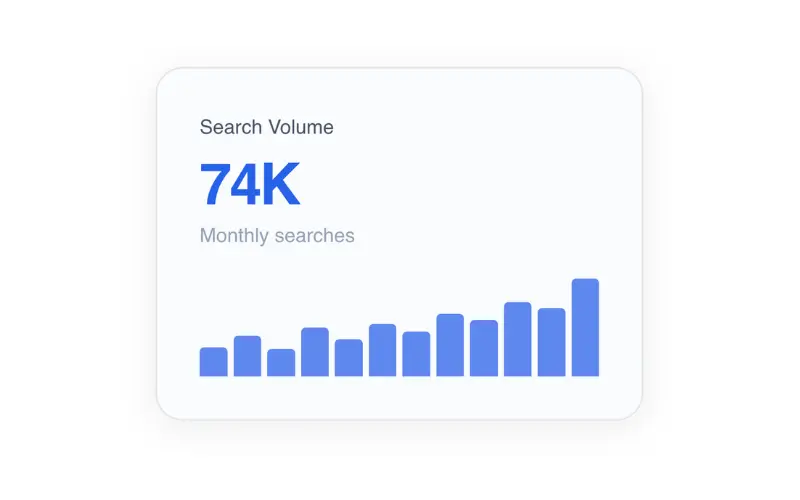
It is common practice to divide all keywords into three main groups based on search volume. These are high-volume, medium-volume, and low-volume keywords.
This classification allows us to allocate resources, choose keywords, and evaluate our efforts.
High-Volume Keywords (High Volume, Short Tail)
These are short keywords that have a large search volume.
For example, keywords such as “laptop”, “phone”, “insurance”, and “loan”. These keywords usually consist of one or two words and have a very large audience.
Their advantages include a large potential reach, high traffic volume, and the ability to attract a broad audience.
These keywords also have disadvantages: extremely high competition, very difficult user intent analysis, and relatively low conversion rates. Because when a person, for example, types “laptop”, we do not understand what they want from that query: check laptop prices, compare models, read reviews, or look for laptop news. It is very difficult to understand exactly what they want.
Medium-Volume Keywords (Mid-Tail, Chunk and Middle)
These are more specific keywords that have a medium search volume. For example: “buy gaming laptop”, “best winter boots”, “car insurance online”, and “small business loan”.
Here it is already easier for us to understand what exactly the user wants. Competition is a little lower, but still quite high. The search intent is clearer because the user specifies what they want to buy, order, or compare. It is somewhat easier to rank, but the competition is still fairly high.
For most websites, these keywords become the foundation of the SEO strategy and the primary target keywords.
Low-Volume Keywords and Long-Tail Keywords
These are long, highly specific keywords. For example: “buy gaming laptop under 1000 dollars”, “waterproof hiking boots”, “car insurance for drivers under 25”, and “small business loan without collateral”.
These keywords will have lower search volume, however, they are exactly the kinds of keywords that generate conversions and attract the most valuable visitors. The reason is very simple: the user already knows what they need. They are much closer to making a purchase and a decision within the marketing funnel.
Therefore, these keywords have advantages such as relatively low competition, a high level of targeted traffic, better conversions, and easier SEO promotion.
That is why you cannot look only at search volume.
Let’s imagine two keywords: “laptop” and “buy gaming laptop under 1000 dollars”. The first one has a large search volume, while the second one has a much smaller volume. But in the second case, the user is already almost ready to buy, and their value to the business may be much higher.
That is exactly why we do not choose only high-volume keywords. We understand that, first, a high-volume keyword can be part of a lower-volume keyword. Second, very often when we build semantic research, we use medium-volume and low-volume keywords.
Yes, it should also be mentioned that there are so-called micro-volume or ultra-low-volume keywords. These are keywords with a search volume of around 10, or when tools show zero, but we logically understand that such a query exists. We simply check Google and see that pages are ranking for that query.
Such keywords can sometimes be the most interesting for us because they have less competition, are searched less frequently, and are not obvious.
These keywords are especially useful when you have a small website that does not yet have much authority. According to the Avalanche SEO technique, which I have already written about here on the site, we can target exactly these types of keywords when we are just developing our website.
Why Is High Search Volume Not Always Good?
In general, specialists can make the same mistake over and over again: they see a large search volume and assume that such a keyword is the best opportunity for promotion. But in practice, things turn out to be much more complicated, because high search volume does not guarantee traffic, sales, or successful rankings.
The Zero Click Search Problem
Today, a significant portion of these high-volume search queries end without a click to a website because the user can get the answer directly in the search results.
The reason is various SERP features: AI Overview, Featured Snippets, People Also Ask, calculators, weather forecasts, currency exchange rates, time widgets, maps, and product carousels.
For example, if we enter the query “euro to dollar exchange rate”, it may have a high search volume, but the user will see the answer directly in Google and will not visit a website.
Or we enter a query such as “Michael Jordan age”, and Google will show the answer directly in the search results.
Or you type “time in Tokyo”, “time in New York”, or “time in Madrid” and get the answer directly in the search results.
Therefore, the search volume for such queries may be high, while the actual traffic will be very low. Google will keep all of that traffic for itself.
High Competition
All keywords exist within the relationship of “search volume versus competition”. For example, there can be high-volume keywords with low competition, although I have hardly seen such cases recently. On the other hand, there can also be low-volume keywords with high competition — that happens too.
But you would probably agree that the higher the search volume, the more likely it is that competition will be stronger.
For example, keywords such as “loan”, “insurance”, “laptop”, “real estate”, and so on will be extremely competitive because the top results are occupied by large companies with significant budgets. It is very difficult for a small or even medium-sized website to rank for such keywords.
At that point, the difference is no longer made by SEO optimization but by the authority of the website.
That is why we need to evaluate not only search volume but also ranking difficulty.
Irrelevant Traffic
Very often, a large search volume does not provide commercial value.
For example, let’s compare two keywords: “what is Bitcoin” and “buy Bitcoin”. The first keyword will have a higher search volume because people are simply interested in the topic. The second keyword will have lower demand but a much higher probability of conversion.
The same applies to other industries.
“What is SEO?” versus “order an SEO audit?”
Obviously, the query “what is SEO” will be read by a beginner who wants to enter the industry, while the query “order an SEO audit” will be used by a business owner who is already looking for a service, and so on.
Therefore, focus on specific keywords.
One more thing worth noting: high search volume is not a goal in itself.
It is important to understand information about the user: who is searching for the query, why the user is entering it, how difficult it will be for us to rank for that keyword, how many clicks will remain after all Google SERP features, and whether such traffic is even capable of bringing us customers or not.
Where Does Search Volume Data Come From?
SEO beginners sometimes think that Search Volume numbers are exact data from Google, but in reality, that is not the case at all.
Google Knows More Than Anyone Else
Yes, of course, the largest source of search demand data is Google, which processes billions of searches every day and has the most accurate statistics possible.
But Google does not want to provide this data publicly.
Many specialists get information through Google Keyword Planner. However, Google Keyword Planner was created primarily for advertisers.
This tool allows you to estimate keyword popularity before launching an advertising campaign.
At the same time, Keyword Planner data has limitations.
First, Google very often combines similar keywords into a single group.
Second, many metrics are displayed in rounded ranges. Instead of exact values, you will often see ranges such as 100–1,000, 1,000–10,000, or 10,000–100,000 searches per month.
So How Do Ahrefs, SEMrush, Keywordstat, and Other SEO Tools Work?
Popular platforms use their own methods for calculating Search Volume.
Typically, they combine several data sources:
- Google Keyword Planner;
- Clickstream data;
- proprietary algorithms;
- historical data;
- machine learning.
How Should You Treat Search Volume?
You should not treat Search Volume as an absolutely precise number of searches.
You should view this metric as a benchmark.
If one keyword has a search volume of 500 and another has 50,000, then it is not that important for you to know the exact value of each one.
The most important thing is understanding the relative popularity of a topic and using that information to make decisions.
How Keyword Research Services Actually Work Behind the Scenes
I would like to share a little bit of the behind-the-scenes process and explain what stages are typically used by services that collect search queries.
Services usually collect keywords through two main methods. Either through APIs using officially provided search engine data, or by simulating real user actions, known as search result scraping or SERP parsing.
Using APIs
Using APIs is the most legal way to obtain information. For example, a search engine provides a special digital gateway through which a service sends a specific request, such as statistics for the keyword “buy a car” or “buy a laptop”, and receives a structured response.
Where can this data come from? For example, from Google Ads accounts or through the Google Keyword Planner API, where Google provides information collected for advertisers.
This approach offers high accuracy, legality, operational stability, and current CPC data. However, search engines often hide precise information for unpopular and low-volume keywords in order to protect commercial secrets.
Scraping or SERP Parsing
The second method is called scraping or search result parsing. This is a more popular method used by many tools.
How does it work?
A program, robot, or crawler goes to Google, enters a target keyword into the search bar, loads the search results page, and extracts website titles, related searches, and search suggestions from the HTML code.
This is how keyword statistics are collected.
Search engines very often fight such bots using CAPTCHAs and IP blocking. To bypass these restrictions, services use proxy servers, CAPTCHA solving systems, user behavior simulation, and other techniques.
This is a much more accurate method of collecting keywords because it allows you to see the actual search results and gather a large number of search queries.
Of course, this approach is much more expensive to maintain and also violates search engine terms of service.
What Happens to the Data Next?
After information is obtained through APIs or scraping, the data enters the service’s databases. There, algorithms remove junk data, connect keywords with search volume metrics, and present the information to users as convenient numbers, charts, and tables.
Processing this data at scale through APIs and scraping is a fairly expensive and complex process. That is why an entire business exists around reselling such data, and various services and companies share this information.
What Is Clickstream Data?
First, let me tell you about Clickstream. It is the detailed digital footprint left by a user while browsing the internet. It includes the sequence of clicks, page visits, and link interactions.
Today, this data is extremely important because it shows real user behavior and makes it possible to obtain information outside of official search engine limitations.
Where Does Clickstream Data Come From?
It can come from permissions that users grant to browsers. Just look at how many browser extensions you have installed in Google Chrome.
It can also come from free software such as antivirus programs, media players, and utilities. Yes, all free software is not completely free. There is nothing truly free in this world.
It can also come from internet service providers in countries where such activities are permitted by law.
How Is This Data Resold and Used?
First, the data is collected and aggregated. Very often, raw databases are then resold through data providers. Large companies sell billions of keyword records or provide access through APIs to smaller companies.
There are also sellers of ready-made keyword databases. Many projects spent years collecting search queries and then sold these massive databases.
There are also dedicated Clickstream collectors that purchase real-time user behavior data.
What Does the Entire Collection and Resale Chain Look Like?
Developers of free software and browser extensions sell large datasets to major companies, data aggregators, and data brokers.
The data is then cleaned, processed, and structured.
After that, aggregators sell access to analytical platforms.
SEO services then purchase Clickstream databases and use them in their products.
That is why you often see nearly identical data across different SEO tools, while in some cases one service may show significantly different numbers. This can happen because the data was purchased from different suppliers and aggregators.
Why Can Search Volume Data Differ Between Tools?
You may encounter situations where one service shows numbers that differ significantly from others. This happens because every service uses its own technologies.
Proprietary Clickstream Data
Large players such as Ahrefs and SEMrush buy Clickstream panels, obtain real click data, and build their own internal algorithms based on that information.
You know, I personally use SEO plugins. For example, SEOquake belongs to SEMrush, while the Ahrefs SEO Toolbar plugin belongs to Ahrefs.
Here is a simple answer: almost every major keyword research service has at least one Chrome extension that can potentially be used for such purposes.
Different Parsing Networks
Services may scrape search results independently and identify fresh keywords in real time.
Different Forecasting Models
Search engines often hide exact numbers for low-volume keywords, so services fill those gaps using their own mathematical models, forecasts, and accumulated historical data.
Update Dates
I also want to tell you that service data is not live. It is historical data that is often delayed by weeks, months, or even longer.
I attended a conference and spoke with the founder of one service. I cannot reveal the name of the service due to an NDA, but he told me that some data can be delayed by 12 months or more.
At the time, I was very surprised, but later, when I started studying this topic more deeply, I understood why this happens.
That is why there is no such thing as an exact search volume right now, and all numbers remain estimated models.
Why Does Data Become Delayed and Outdated?
There are several reasons for this. Let’s discuss them as well.
How Is Search Volume Calculated?
There is a “12-month formula”. Search Volume in most tools is an annual average.
In other words, the service takes the total number of searches from the last 12 months, divides that number by 12, and produces the final figure.
If you spot a brand-new trend right now, for example in sports, a new gadget, or a TV series, the service will most likely show a relatively small search volume. It will only notice the spike next month, and even then the number will be smoothed out because during the previous 11 months nobody searched for that keyword.
That is exactly why we get such data.
Update Priorities
Large services store billions of keywords, and constantly updating each one simply does not make sense.
That is why they use a priority system.
There are high-priority keywords that people search for continuously. Such keywords may be updated daily, every few days, or weekly. As a result, the data for them will be more accurate.
Meanwhile, low-volume keywords may not be updated for several months at all.
For example, tools like Ahrefs, which allow you to “refresh” keyword data on demand, don’t actually scrape Google in real time. Instead, they retrieve the latest cached records from their internal servers or queue the request with high priority, meaning that even “refreshed” metrics still depend on accumulated historical cycles.
Clickstream Data Delays
Since virtually all keyword research services depend on Clickstream data, information from providers requires time for collection, cleaning, filtering, resale, and processing.
These processes also take quite a long time, sometimes up to four weeks.
Therefore, if you need data right now, you can use other sources of information.
For example, Google Trends. It will not show the exact search volume of a keyword, but it will show interest trends and momentum.
Search suggestions are also useful. If you use Search Suggestions in the search results, you can see what people are searching for right now because search engines generate these suggestions almost in real time.
Another very good source of data is Google Search Console.
If you already have your own website, you can view real impressions, clicks, and keywords with a delay of only a few days.
This is extremely high-quality data, but unfortunately it is only available for your own website.
A Few Additional Insights
As I already mentioned, Google does not like being scraped. It sets various traps for bots.
If Google detects mass scraping activity from a particular IP network, it does not always block the bot. Instead, it may return mixed or even fabricated search results.
As a result, the service collects data that is essentially fake. That is why large companies spend significant amounts of money on infrastructure designed to imitate real user behavior as accurately as possible.
And there is one more interesting point.
Competition in the SEO tools market is so intense that many companies scrape not only Google but also each other.
Instead of collecting data directly from search engines, which is often very expensive, some players analyze data from major services, including SEMrush, send requests through various automated accounts, and collect information from those platforms instead.
That is why the SEO data market is much more complex than it may seem at first glance.
Keyword Seasonality
Google Search Volume usually shows average monthly values over a long period of time, most often over 12 months. Such an average can heavily hide seasonal fluctuations.
Therefore, before creating content or launching an advertising campaign, you can check demand trends through Google Trends.
This will help you understand when demand starts, when it ends, what the overall trend looks like, and what the forecast is: whether the trend is declining or, on the contrary, growing.
Evaluating Keyword Difficulty
Very important metrics are not only Search Volume but also Keyword Difficulty.
We always work with a pair of metrics: search volume and ranking difficulty, because even keywords with large search volumes may be practically unattainable for a new website.
At first glance, it may seem that the keyword Laptop is much more attractive because it is searched far more often.
But for the keyword Laptop, the search results are already dominated by the largest online retailers, technology manufacturers, and authoritative tech websites. Competing with them will be extremely difficult for a new project.
Meanwhile, the keyword Best laptop for students under $500 has a lower search volume, but the competition is also significantly lower. Therefore, gaining rankings and attracting your first visitors will be much easier.
That is why you should evaluate not only search volume but also the level of competition. Sometimes a keyword with lower volume can deliver results faster and with fewer resources.
Keyword Difficulty Levels
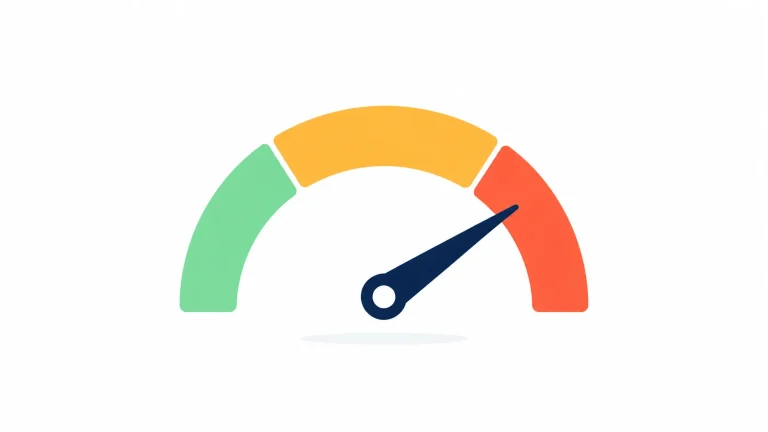
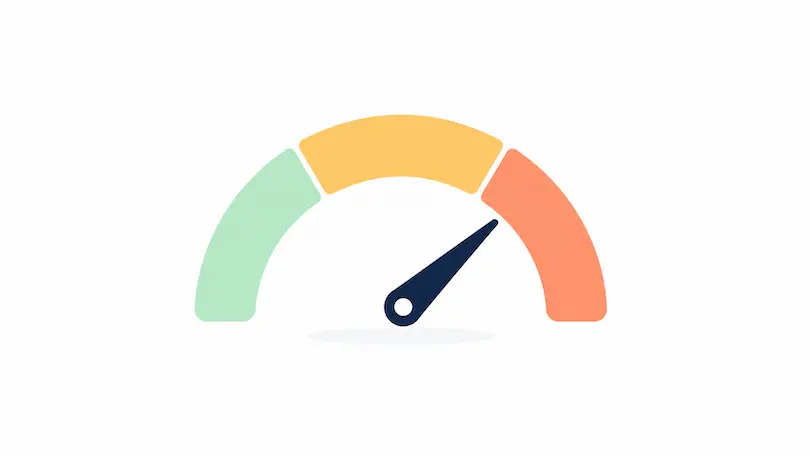
High Search Volume can be misleading without considering KD, so let’s look at the simplest Keyword Difficulty examples.
Super Difficult Level: 70–100
These may include keywords such as “credit card”, “best insurance”, and similar terms.
Their Search Volume will be very large, and Keyword Difficulty will also be extremely high because the top results are occupied by multi-billion-dollar banks, financial aggregators, and authoritative media outlets, such as Forbes or NerdWallet.
These websites have millions of backlinks accumulated over many years. For a new website, ranking for such keywords will be practically impossible.
High Keyword Difficulty: 50–70
This is the zone of intense commercial competition.
Here you will find keywords such as “buy Apple laptop”, “best wireless earbuds”, and “best wireless headphones”.
Search Volume will be high, but KD will also be high because the top-ranking pages are occupied by large online stores such as Amazon, other e-commerce platforms, and technology blogs.
Therefore, competing with them will require a large number of high-quality topical backlinks, strong website authority, and trust that takes years to build.
Ranking for such keywords is possible, but it will require many months, if not years, of active work and very large link-building budgets.
Medium Difficulty: 20–50
This is a reasonable compromise.
Here you will find keywords such as “how to choose a laptop”, “how to choose a gaming laptop”, or “DIY coffee machine repair”.
Search Volume here will be fairly moderate, but Keyword Difficulty will be much lower because the search results are no longer dominated by monopolies. Instead, you will find niche websites, articles, personal blogs, and forums.
Yes, the top-ranking websites will have backlinks, but their scale will not be as large, and you will be able to replicate that link-building.
This is an excellent Keyword Difficulty level for a growing website.
If you create high-quality, in-depth, and expert content, you can reach top positions in a relatively short time — 3 to 6 months.
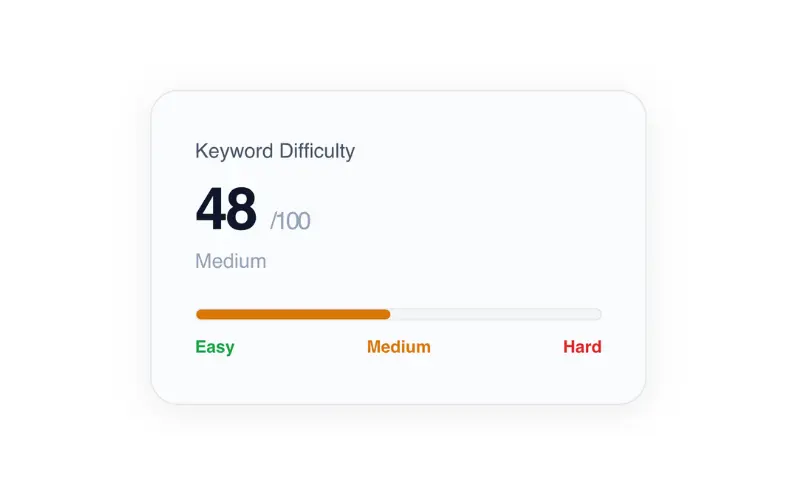
Easy Level: 0–20
These are the so-called low-hanging fruits.
For example: “why does the pedal squeak on my car” or “best coffee shops in a specific city area”, and so on.
These are low-volume keywords. Their Search Volume will be low — around 10–20 searches per month. Accordingly, KD will also be very easy because search engines often simply do not have much content to show.
Nobody specifically creates pages targeting such keywords.
Therefore, you can target these types of keywords. Very often, the top results consist only of websites such as Quora, discussion sources, or forums where someone is simply talking about the topic.
I also think it’s crucial to remember that keyword difficulty varies greatly by geography.
A search query that receives a “Super Complex” (80+) rating in US search results, where you’re competing with giants like Forbes or NerdWallet, might have a very manageable medium or low difficulty rating in smaller markets where globally authoritative domains don’t dominate the top ten as much.
Conclusion
In conclusion, Search Volume remains one of the most important SEO metrics. It helps us understand how much demand exists for a topic, estimate the size of a potential audience, and determine which directions may bring the largest amount of traffic to your website.
Therefore, one of the most common mistakes is treating Search Volume as a ready-made forecast of your future success.
It is important to understand that all Search Volume metrics are estimates, not exact data from Google.
The purpose of Search Volume is to help you understand the relative popularity of a query and make data-driven decisions when choosing topics to target.
So, in simple terms, Search Volume is not a compass but a roadmap that allows you to navigate the world of content creation. It shows the direction of travel but does not guarantee that you will reach your destination.
Therefore, evaluate keyword data objectively and look at the bigger picture. Consider not only search volume but also competition, user intent, seasonality, and the potential value of these keywords for your business.
This approach will allow you to create content that not only ranks well in search engines but also brings users, customers, and revenue.