Branded keywords are search queries that contain a company name, product name or recognizable brand phrase.
These keywords matter because users searching for a specific brand already have trust, interest or buying intent, which means the traffic is usually far more valuable than random informational visits.
Branded Keywords Meaning
When a user searches for the name of your company, a specific product, or a landing page, or even the name of the product’s founder, they’re already at the very bottom of the sales funnel, and their intent is at its peak.
If you lose this user at this point, giving them to an aggregator site, a comparison site, or a competitor who’s launched ads for your brand, you’re losing big. After all, you’ve already paid for their attention through PR, content, targeted advertising, product development, and other awareness-building methods.
Many companies chase various high-volume, highly competitive search queries, but their branded search results are unprotected and sometimes consist of old PDFs, forgotten subdomains, and random review sites that can rank quite high.
As a result, your rankings in analytics services are unstable, conversion rates drop, and you’re losing money.
What are branded keywords?
Branded keywords are search queries that contain the name of a company, product, or a unique phrase associated with your brand.
This is because users rarely search for information using pure text patterns. They abbreviate names, make typos, confuse products with features, and create strange combinations. Yet, all of these queries convey a clear intent to buy from you or find your service.
Search engines understand this intent. To effectively work with such semantics, they need to be divided into key categories based on user intent.
Navigational queries
These are pure searches for a website or entry point to a product. For example: Slack login, Notion web app, Keywordstat subscription.
Commercial keywords
Comparison or evaluation before making a final decision. For example: Figma plugins, ClickUp reviews, Notion vs. Obsidian.
Transactional queries
These are when the user is very close to making a purchase and is looking for the best deal. For example: Keywordstat pricing, Apple student discount, Spotify Family plans.
Informational keywords
Existing customers searching for instructions. For example: Notion templates, how to export keywords from Keywordstat, Zoom technical support.
If your SEO reporting optimization tool only groups keywords by exact match, it will miss this huge layer of “unclear” but highly converting queries, and you will lose sight of them.
Branded SEO
As soon as your brand begins to grow, the search results around it can become a toxic environment, as competitors begin buying up contextual advertising for your brand, writing negative reviews, and pushing them to the top. Coupon sites may feature old coupons of dubious origin. YouTube bloggers are hijacking this traffic for queries like “your product” and “reviews.”
To keep your customers, you need a Brand Protection, or SERP Domination, strategy. This involves completely displacing other websites from the visibility of your keywords.
How to get full coverage of the first page of Google?
You can’t stop people from writing bad things about you, but you can fill the entire top 10 search results with pages you control.
To achieve this, you can implement tools such as these:
Protective Contextual Advertising
You can run contextual advertising on Google for your own branded queries, and your ad will occupy the top spot, blocking competitors’ attempts to steal this hot traffic.
Creating Additional Pages
Don’t wait for your competitors to write a comparison article. You can create a VS section on your own website. For example, you can create comparison hubs like Keywordstat vs. Semrush or Keywordstat vs. Ahrefs
You can also create Pricing, Reviews, and other pages. Search engines are more likely to rank your official website than some third-party blog.
Entity SEO
Implement Schema.org microdata: Organization, Product, FAQ. This will allow you to occupy a large interactive Knowledge Panel at the top of the screen on desktops and get rich snippets in mobile search results.
It’s important to note that FAQ schema markup is no longer displayed in search results as it once was. Under these circumstances, it’s critical to fully complete your Google Business profile and utilize all remaining snippet enhancement tools.
External Platform Optimization
If you can’t displace review sites, simply use them.
First, check if you have profiles on platforms like Trustpilot, Smart Customer, G2, LinkedIn, YouTube, and so on.
You can secure the remaining top 10 positions using these platforms, eliminating the risk of random negative reviews.
Brand SEO in the Age of AI Search
Have you noticed that modern search is rapidly changing? Classic links are being replaced by ready-made answers right on the search results page. In this reality, brand SEO is transforming into AEO (Answer Engine Optimization) – optimization for the next generation of search engines.
Now, users often no longer need to click through websites to compare your product with competitors, because an AI model automatically fetches data from the web, creates a summary table of competitors, or makes a textual verdict.
Therefore, most language models must have up-to-date information about your company. If they use outdated data, your brand will simply lose customers.
How can you get AI to recommend your brand?
To control what a neural network says about your company, you need to implement an LLMO optimization strategy. I wrote about this in another article.
In short, the following are important:
Citation on authoritative resources
AI models are often trained on large data sets and scan the Live Web. Therefore, brand mentions in independent reviews, specialized media outlets, TechCrunch, and directories like G2, Capterra, and others are critical.
The more often your brand is mentioned in relation to its niche, the more likely it is to be included in AI responses.
Structured data
Neural networks prefer clear logic. Use extended Schema.org markup: Organization, Product, Review.
This helps AI parsers accurately find your prices, product specifications, and contact information. Although modern LLMs have developed contextual understanding and can easily parse regular HTML text.
Brand context monitoring
AI evaluates not only brand information but also the sentiment of the mentions.
If you receive a lot of negative feedback on forums like Reddit and Quora, the LLM algorithm may add a phrase to your summary about how users frequently complain about certain issues.
Reputation Management
Managing your reputation on external platforms is now crucial for how AI generates search results.
Creating Expert Content
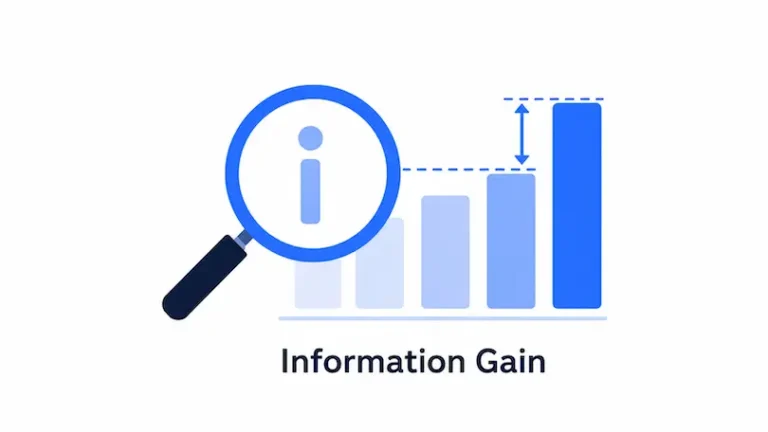
To ensure that AI cites your website as a primary source, you must create Information Gain. I also wrote about this in another article; please read it.
Your content should include unique research, real-world case studies, and infographics, not simply rehash other people’s articles.
Dangerous Anomalies
Another critical aspect worth discussing is that an increase in branded search volume doesn’t always indicate healthy growth for your business.
In practice, SEO sometimes sees branded traffic charts rise sharply, but at the same time, revenue, overall business metrics, and LTV plummet.
When might this happen?
For example, during public scandals, massive technical outages, unsuccessful product updates, or refund issues.
In other words, you see an increase in demand for your brand, but this demand is negative because context is everything.
How to audit such a traffic surge?
If you notice a sudden spike in search queries for your brand, run a quick check using this algorithm.
Open Google Search Console and go to the “Performance” section.
Filter for keywords that contain your brand name.
Sort the list of queries by the number of Impressions and Clicks.
Compare Clicks and Impressions for the current period with the same period last month/year.
It should be noted that it is not just the CTR that needs to be analyzed, but the appearance of destructive tail markers (scam, error, does not work) in the list of keywords.
Explore Intent Markers
If you see any destructive tails, such as fraud markers (scam, scam, deception, etc.), churn markers (cancel subscription, how to delete an account, how to get a refund), or failure markers (not working, 500 error, error, service down), this is a warning sign.
If you notice that traffic is growing due to these queries, immediately share this data with your PR department, customer service, product analysts, and other people responsible for the product.
The SEO specialist’s job here is to respond quickly and deploy relevant instructional pages on the website. For example, clearly explain the refund process, the status of troubleshooting, and so on.
And intercept this traffic before it gets consumed by aggressive threads on Reddit, Quora, or other third-party forums.
Why do major brands rank even with clearly weak pages?
You might notice this trend, but the reality of modern search is that strong brands get huge favoritism from Google’s algorithms.
That’s why a well-known company can rank high even with a blank or poorly developed page, while a small business can’t break through to the first page even with a perfect expert longread.
Why is this?
It’s all about behavioral factors and the E-E-A-T concept.
I remember back in the 2010s, it was easy to outrank a brand for queries like “brand name + price” or “brand name + reviews,” and so on. You could simply create such a page, optimize it, write a ton of content, and add lots of keywords. And it worked.
But Google has corrected this situation, and now the search engine can recognize historical patterns of user behavior.
People trust a well-known name and click on its link in the search results much more often and quickly, so such pages receive a higher CTR.
They return to search less often because they find the answer on a familiar domain. This reduces pogo sticking.
Furthermore, users directly enter the website address into the browser or simply search for the brand name.
Over time, search results begin to adapt to the brand’s authority. The algorithm understands that users want to see this particular company, even if its text optimization is less effective.
Other sites don’t have this level of trust. They have to constantly prove that their result is worthy of a click and validate the value of every line of content and every line of code.
A weak page from a well-known brand may temporarily rank high, but Google’s latest updates are increasingly penalizing even giants for useless or fluffy content.
Real Business Growth
Let’s be honest: business growth occurs when your non-branded traffic grows. This is what brings in new audiences who weren’t previously aware of you.
If your traffic grows solely due to your brand, then you’re simply capitalizing on existing demand generated by your sales department, media advertising, word of mouth, or product PR.
But this traffic can dry up, and then SEO growth will stall. Therefore, you need to audit your promotional effectiveness, starting with a complete separation of branded and non-branded traffic.
Conclusion
Branded demand can’t be created with SEO tools alone. Company awareness is built over years of integrated work. It’s the result of a quality product, a strong community, viral content, conference presentations, blogger promotion, and strong product support.
SEO can’t build a brand from scratch. But branded SEO is the main shield for your marketing.
You spend resources on getting people talking about your product. But you can lose these “warm” customers at the very last moment if you ignore brand protection.
A wasted marketing budget is one of the most expensive mistakes you can make.
So protect your brand, control your SERPs, and don’t give your competitors what you’ve already paid for.