Non-branded Keywords are search Keywords that do not mention a company or product name directly.
These searches matter because they bring people who are still comparing options, exploring solutions and deciding where to spend money, which makes non branded SEO one of the main growth channels for almost any business
When a user types your company name into the search bar, half the work is already done. They know about you; they may have seen an ad, read reviews, or come through a recommendation.
But with non-branded Keywords, it’s a different story. Someone might type in “best keyword research software” or “running shoes.” At that point, they have no loyalty—they’re simply looking for a solution to their pain.
And many companies are fighting for user trust before they even know they exist. This is where SEO optimization truly begins to scale a business and generate traffic, leads, and sales from scratch, rather than simply defending existing positions.
Branded vs Non-Branded Traffic
Let’s break down the differences between these two concepts, as they involve completely different factors, behavior patterns, different expectations, and, consequently, different conversion rates.
Branded traffic converts almost instantly because the user is already warm. They’ve already come to buy from you, and most likely, a lead, and perhaps even a sale, is guaranteed. However, this type of traffic has a ceiling, which is limited by your company’s market recognition. This is the work of your marketing, PR, and other services, which ensure people know about your brand.
Non-branded traffic is a long-term strategy. This type of traffic can attract an audience that has never heard of you. You may be working much harder, but you’ll need to guide the customer through the entire funnel.
Let me provide a table to help you better understand branded and non-branded traffic, and I’ll also show you their key criteria and metrics.
| Criteria / Metric | Branded Traffic | Non-Branded Traffic |
|---|---|---|
| Customer Journey Stage (CJM) | Bottom of the Funnel (BoFu) — choosing a specific company. | Top and Middle of the Funnel (ToFu/MoFu) — looking for a solution to a problem. |
| Competition Level | Minimal. You’re protecting your own brand name. | Maximum. You’re competing with every player in your niche. |
| Growth Potential | Limited by your current brand awareness in offline channels and media. | Virtually unlimited. Limited only by the size of the market. |
| Conversion Rate (CR) | Very high. The user already trusts your brand. | Medium or low. Requires nurturing through on-site content. |
| Main Page Types | Homepage, contact page, product pages. | Informational blog, comparison articles, guides. |
It’s also worth noting that if you’re developing a multi-brand online store or marketplace, queries like “buy Nike sneakers” or “Samsung smartphone price” will be considered non-branded traffic, because the brand in this case is the name of your marketplace.
You’re attracting people who are searching for the manufacturer’s brand but haven’t yet chosen your platform as a place to buy. So, keep this in mind when segmenting.
The Anatomy of Non-Branded Keywords
Most non-branded search keywords describe a problem, product category, or comparison of options. Here, only pure user intent exists.
To clearly categorize non-branded keywords by funnel stage, we can divide them into three levels.
Awareness (TOFU)
These are informational queries. They are entered by users who have encountered a symptom of a problem or are looking for a theoretical solution. For example: “how to increase email open rates,” “why is my database slow?”, “I can’t log in to a service,” and so on.
What do you need to deliver? You need to write in-depth expert articles, checklists, guides, and so on.
Consideration (MOFU)
These are research or commercial queries. They are entered by users who have already identified the tool they need but are still choosing the best solution on the market or the appropriate format.
Examples: “best keyword research tools,” “CRM for startups,” “review of wireless headphones for gamers,” “software for…”
What can you offer on your website? Comparison tables, top 10 lists, listicles, reviews, product pros and cons.
Decision (BOFU)
These are transactional queries that users enter when they’re ready to take action—purchase, register, download. But they haven’t yet chosen a specific company.
Queries here might include: “download a sales funnel template in Excel,” “buy a cloud CRM,” “website builder with a free trial,” “keyword finder price.”
What can you offer on your website? You can create specific landing pages, landing pages, cost calculators, interactive configurators, and so on.
In other words, using these keywords, you capture customers before competitors have a chance to engage them in their ecosystems, subscriptions, or form brand habits.
Junk Keywords
We also need to avoid chasing high search volume, where large numbers in keyword planners create a false sense of security.
Remember this simple rule: search intent is always more important than search volume. Therefore, a keyword with a monthly search volume of 300 Keywords can generate much more net profit than a keyword with a monthly search volume of 100,000.
Why is this?
The illusion of traffic. The search query “CRM” attracts students writing term papers, competitors testing the market, and simply curious users. Therefore, the conversion rate here will be very low.
A wall of giants. The search results for such high-frequency, non-branded queries are very competitive. They contain aggregators, large sites, Wikipedia, and established, established brands that have been in the market for a long time and have large budgets for link building. Trying to dislodge them from there for a young website is marketing suicide.
Therefore, if you focus solely on search volume, you’ll waste time, your budget, and won’t even reach the top 10 for those keywords.
SEO in the Age of AI Search
Today’s search has changed forever, and search results are no longer limited to the classic top 10 list with blue links.
When a user searches for a solution to a problem without branding, such as “best keyword research tool,” Google, Bing, and other search engines can display blocks with generative AI solutions.
In the era of GEO (Generative Engine Optimization), achieving a top 10 position is only part of the equation. Your content must be structured so that AI algorithms consider it authoritative and include your brand in their final, aggregated recommendation.
That’s why you must optimize your website for AI search, GEO, and SGE.
How to get AI search to recommend you for non-branded keywords?
Direct answers to questions. Write a concise, descriptive paragraph after the H2 and H3 subheadings, as AI loves to extract ready-made definitions for its blocks.
Lists and tables. Structure your data, comparisons, algorithms, and markup. AI will prioritize extracting this data from tables and lists.
Microdata. Use microdata markup for data: Product, FAQ, Review, Article – so LLM systems understand the context without additional interpretation.
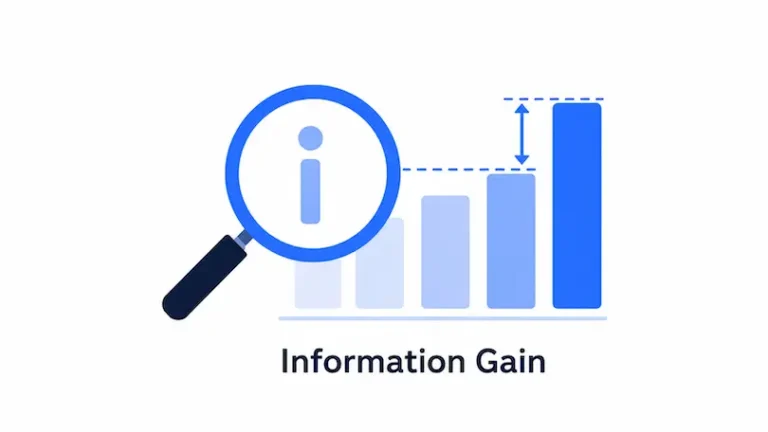
To ensure your article is included in AI assistants’ search results for non-branded queries, you need to implement the Information Gain concept by adding unique case studies, personal experience, and expert analysis to your text, which the AI can cite as primary sources.
Content should be created by authors with proven authority (E-E-A-T criteria), and it’s important to structure the material in a Q&A format, with clear subheadings and direct answers immediately below.
The text should be written in natural, conversational language, seamlessly incorporating long-tail queries, as modern users communicate with AI search engines using detailed phrases rather than dry search terms.
How to find non-branded keywords?
Most standard SEO keyword dumps are huge, bloated databases of keywords. They contain duplicate keywords, empty informational phrases, irrelevant geomodifiers, and random matches.
To save you the trouble of manually cleaning this data from tables, we created our KeywordStat service. Its search for non-branded keywords isn’t based on a simple word match search, but on three main pillars: phrase analysis, search signal analysis, and AI grouping.
Let’s break it down.
Phrase analysis and intent clustering. Grouping words based on the user’s actual intent, not on spelling similarities.
Search signal analysis. This is the study of what types of pages Google ranks for a given query. If they only contain informational content, it’s an informational query. If they contain commercial pages, it’s a transactional query.
AI grouping. This is a search for hidden commercial intent, which is often hidden in long, conversational phrases that users type or interact with AI assistants. This filter helps extract these queries from the long tail of search volume.
Brand Filtering in Google Search Console
To check your success with non-branded SEO, you need to completely remove your brand’s influence from the charts. You can use Google Search Console for this.
Go to the Performance section of your Google Search Console dashboard. Click New – Query, and change the filter to Custom (regex) / Not match.
Apply variations of your brand, separated by a pipe (`|`). In my case, this would be, for example: `keywordstat|keyword stat`.
All that remains on the screen is your actual visibility in the independent market, where users are simply looking for a solution to their problem, not your name.
SEO Avalanche Method
Non-branded SEO will require considerable time to gain traction. In highly competitive niches, search engines need time to trust a new site, and users need time to get used to a new player. Therefore, you must take gradual steps.
There’s a term called SEO Avalanche. I wrote a separate article about it, but here I’ll give you a quick overview.
Rely on long-tail keywords. Don’t try to immediately storm the top positions for high-frequency and highly competitive queries. Start with simple, specific keywords with low competition. This way, you’ll begin to attract your first traffic.
Accumulation of behavioral factors. For these queries, you’ll quickly reach the top 10 and start getting your first visits. People will read your content, linger on your site, and forward it to their friends in messengers. And Google will understand, “Oh, this site produces great content, it can be trusted.” Thanks to this, your site’s ranking will gradually increase.
Avalanche. Gradually, your domain will gain Domain Authority, and you can gradually move on to more frequent and complex non-branded queries: first mid-tail keywords, and then to the main high-frequency industry queries.
And so, you’ll gradually grow without burning through your budget on highly competitive keywords. Topical Authority is also growing, which is very important for the growth of a young site.
You’ll also earn additional links during this time because your content will start getting cited. This will also help your growth.
Conversion Optimization
Bringing traffic from a non-branded keyword is great, but it’s only part of the success. Remember that such traffic is cold, and the person was looking for benefits, not a “Buy” or “Sign Up” button. Therefore, if you try to sell directly in the middle of an expert article, it may not work.
What strategy can we use to retain non-branded traffic?
A useful lead magnet. Instead of writing “Buy our tool,” offer a ready-made PDF checklist inside the article, for example, “10 Steps to Automation.” In exchange for an email, you’ll receive the user’s contact information and can then further engage them by offering your product.
Native Inserts. Mention your product in your blog only as an example of solving a specific problem. Avoid using aggressive banners. Work within the “context and value” paradigm.
Retargeting. Install a tracking pixel on your information page. If a user came to you with a targeted search query, read an article, and left, reach out to them on social media with ads for your service. Offer them a free trial, and so on. Continue to engage with this user.
Summary
Branded traffic keeps your business afloat today, but it’s limited by your brand awareness. Non-branded traffic is what will make your company stronger tomorrow.
Find deep intent, cut out junk, build avalanche SEO based on long-tail keywords, systematically take market share from competitors, grow, move to more complex keywords, and thus increase the effectiveness of your SEO strategy, which will convert into leads and sales.